Restaurant furniture
Restaurant Furniture: the guide to choosing your professional furnishings well
Choosing your restaurant furniture well: the guide
Choosing restaurant furniture is a crucial step in the fit-out. It is not just about looks: it directly affects customer comfort, the use of space and the efficiency of service. Well-chosen furniture improves the customer experience, fosters a welcoming atmosphere and strengthens your venue's brand image.
Traditional restaurant, brasserie, pizzeria or café-restaurant: this guide helps you choose the furniture best suited to your concept, in line with durability and functionality requirements.
How to choose restaurant furniture suited to your concept?
The furniture must match your venue's concept and harmonise with its atmosphere, for a consistent, immersive customer experience.
1. The style and identity of your restaurant
- Industrial style: wood and metal, steel stools, hanging lights.
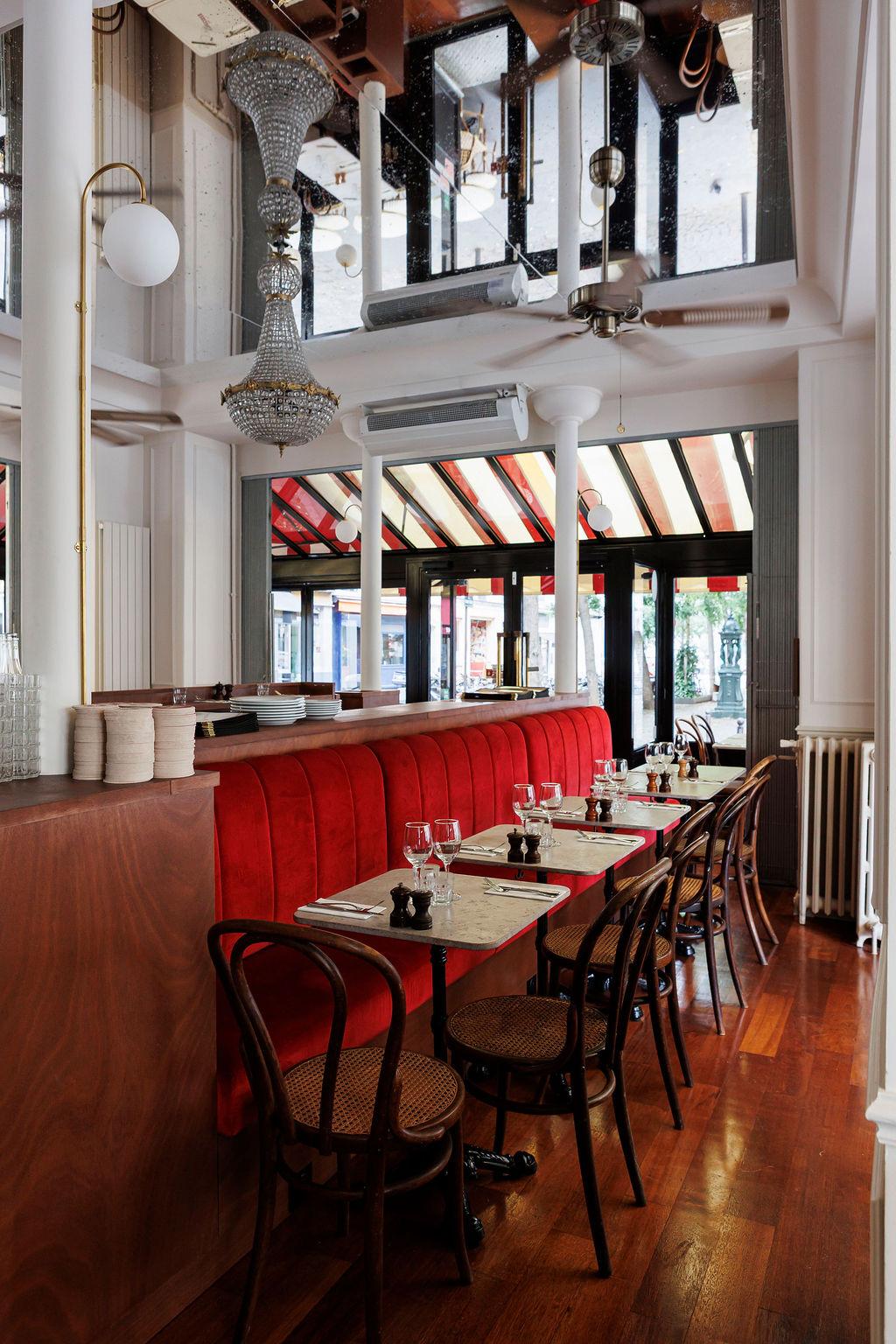
- Parisian bistro feel: rattan chairs, marble tables, comfortable banquettes.
- Scandinavian spirit: pale wood, clean lines, neutral and pastel colours.
- Contemporary design: minimalist furniture, lacquered finishes, understated colours.
A fine-dining restaurant will favour fine materials (solid wood, velvet), a bistro a more industrial style (metal, raw wood).
2. Comfort and ergonomics
- Chairs and armchairs with good back support.
- Tables suited to the available space, without hampering movement.
- Padded banquettes and comfortable stools for a cosy touch.
A customer who feels comfortable stays longer and comes back.
3. Profitability and space management
- Balance seating capacity with ease of movement.
- Favour flexible layouts (modular tables, banquettes, semi-open areas).
- Spread the mix between individual tables, large communal tables and intimate areas.
A cramped space hampers movement; too airy, it feels empty and cuts covers. A good layout also improves service efficiency: clear walkways, tables well placed for waiting staff to see, and distinct zones for quick and leisurely meals.
4. Quality, durability and upkeep
- Sturdy materials (solid wood, steel, reinforced plastic) able to withstand frequent use.
- Finishes resistant to stains, moisture and scratches.
- Smooth, washable surfaces for quick cleaning between services.
Tip: for a terrace, choose tables and chairs treated against liquids and stains.
The essential furniture types in a restaurant
Restaurant furniture falls into three families: tables, seating and complementary furniture (counters, terrace furniture). Each must meet customers' expectations as well as operational constraints.
Tables: a central element
- Square tables: maximum flexibility, standalone for small groups or pushed together into communal tables.
- Rectangular tables: ideal for large communal tables and convivial meals.
- Round tables: encourage conversation and a warm atmosphere.
As for materials, solid wood brings authenticity and warmth (regular upkeep), laminate resists stains and scratches well, and metal and glass suit contemporary interiors.
Seating: comfort and practicality
- Fabric or leather chairs: refined, but more demanding to maintain.
- Wood or metal chairs: more hard-wearing, suited to high footfall.
- Banquettes: maximise space and create intimate areas.
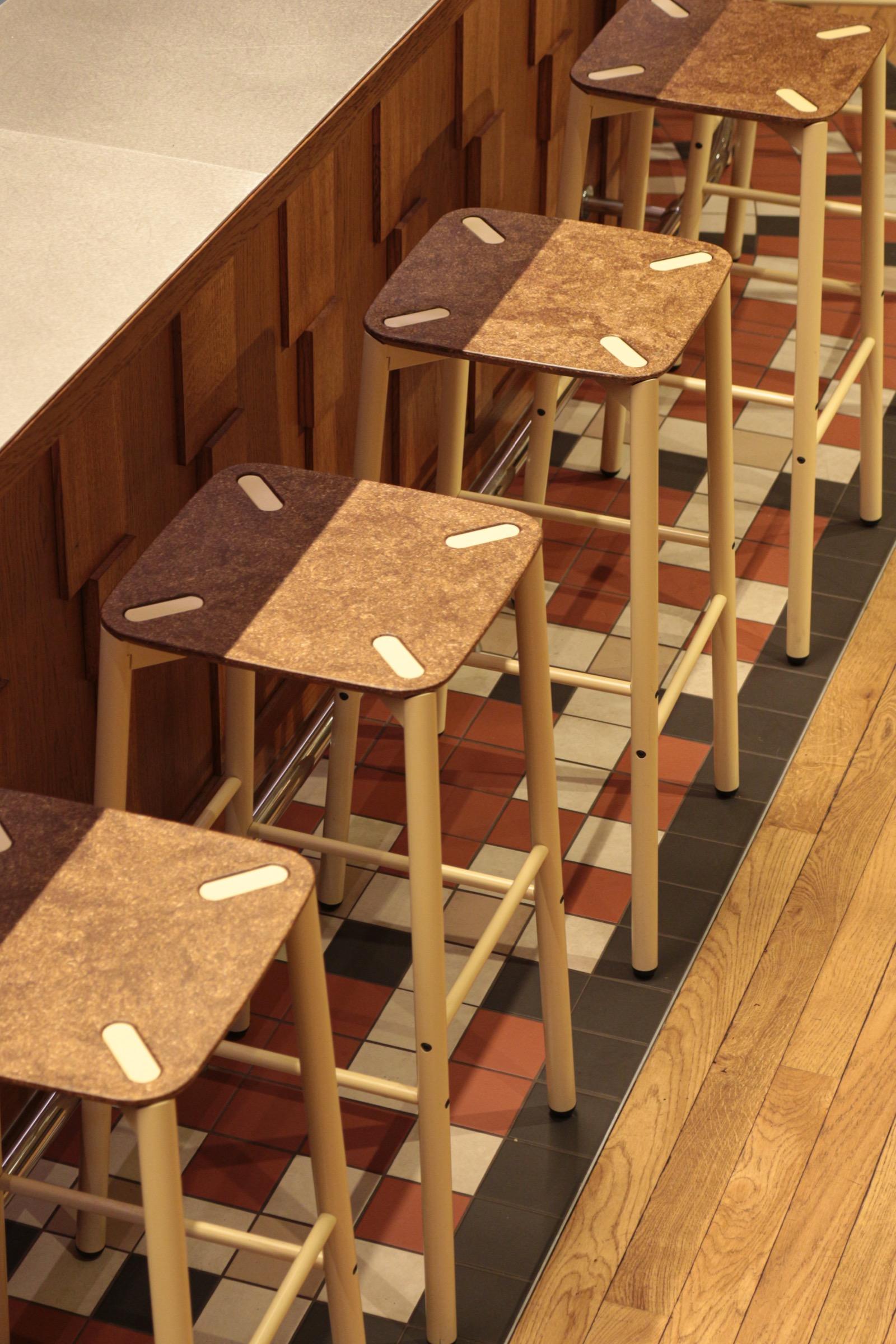
- Counter stools: best chosen with a backrest and footrest.
Chairs must remain ergonomic enough for a whole meal without discomfort.
Outdoor furniture: an extension of the restaurant
- Rust-proof aluminium: light, durable, does not rust.
- Synthetic rattan: natural look and sturdiness.
- Treated wood: timeless charm, more frequent upkeep.
For a terrace, choose according to resistance to the weather and UV, and favour light, stackable stools to make storage easier.
The standards and criteria for durable restaurant furniture
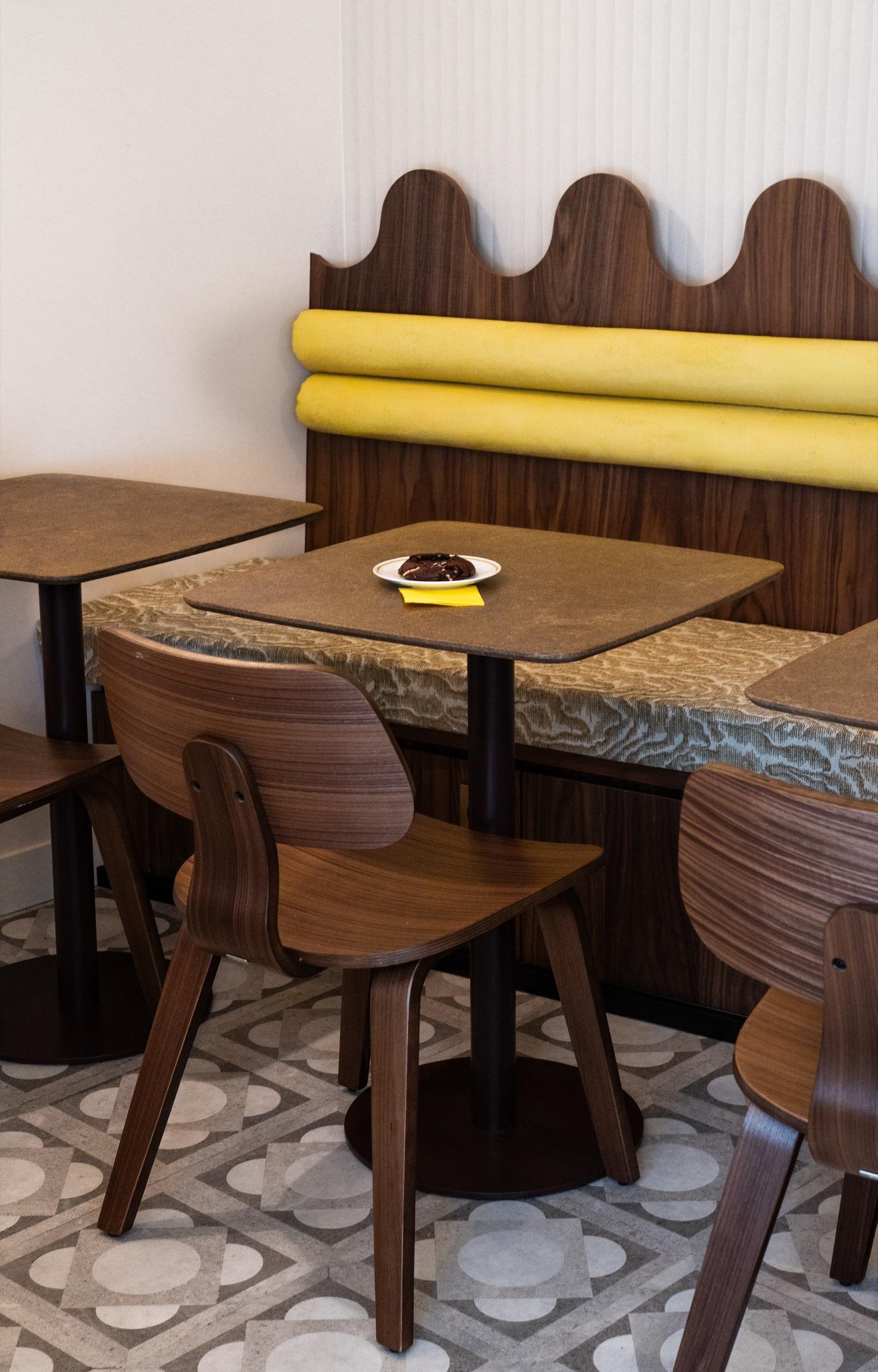
Beyond looks, furniture must meet requirements of comfort, safety and function. The balance between chair height and table height is essential to avoid uncomfortable postures: a poorly matched seat shortens how long guests stay.
Stability is just as fundamental. A wobbly chair or an unsteady table harms not only comfort but also customer safety.
French restaurant furniture: a competitive edge
Made in France is increasingly seen as added value by committed restaurateurs. Why favour French, durable furniture?
- A reduced carbon footprint thanks to local production and short supply chains.
- Sustainable materials: certified wood, recycled metal, or innovative materials such as Balt® (a by-product of brewing beer, 100% bio-based and recycled).
- Better quality and durability, suited to intensive use.
- Compliance with environmental and health standards (PEFC, FSC, NF Environnement).
The criteria for sustainable furniture: favour recycled or bio-based materials, solvent-free finishes and non-toxic glues, French manufacturers and artisan workshops, and furniture that can be dismantled and repaired to extend its life cycle.
The mistakes to avoid with your restaurant furniture
Even with the best intentions, some choices harm the customer experience and the furniture's longevity.
- Opting for non-professional furniture: a domestic piece will not withstand the intensive use of a restaurant. Insist on hospitality furniture, designed to resist knocks, rubbing and frequent cleaning.
- Choosing furniture that is too bulky or too light: an oversized table hampers movement and cuts seats, an over-light chair becomes unstable. Favour stackable or folding pieces.
- Neglecting seat comfort: an uncomfortable seat shortens the time spent in the dining room, and therefore the average spend.
- Ignoring table stability: opt for adjustable legs that compensate for uneven floors.
- Underestimating upkeep: favour stain-proof, moisture-resistant materials, especially for tops and seats.
In short: choosing your restaurant furniture well
Restaurant furniture plays a key role in the customer experience, your venue's image and your profitability. By taking style, comfort, sturdiness, upkeep and use of space into account, you create a welcoming and attractive setting.
- Favour professional hospitality furniture.
- Make sure the seating is comfortable and hard-wearing.
- Avoid furniture that is too bulky or too light.
- Check the stability of the tables (adjustable legs).
- Opt for easy-to-maintain, durable materials.
Our range
The Instead restaurant range
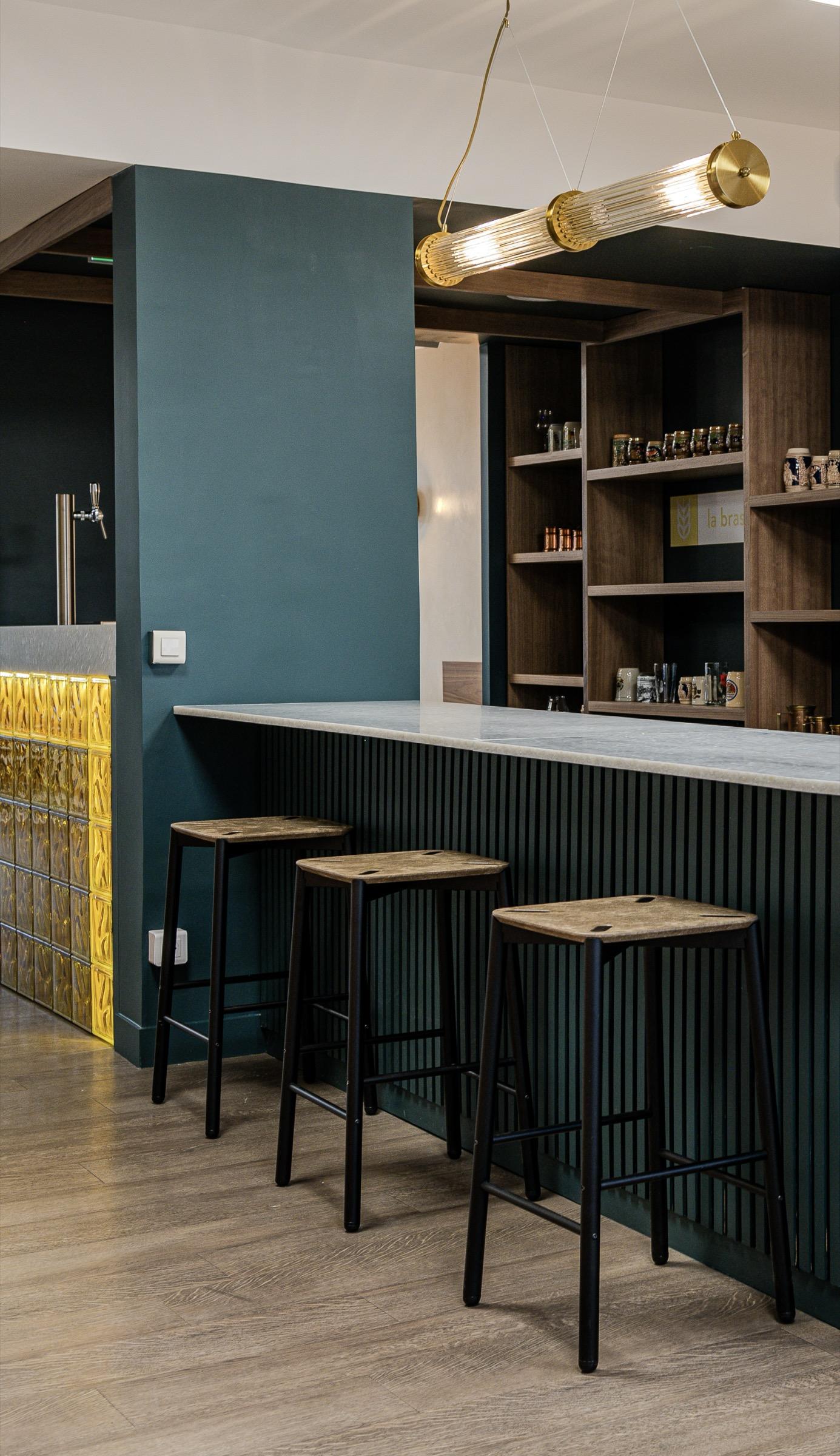
Bar stool
Newport Stool
The first sustainable bar stool made entirely in France from the grain left over from brewing beer.
From 217 € excl. VAT
View details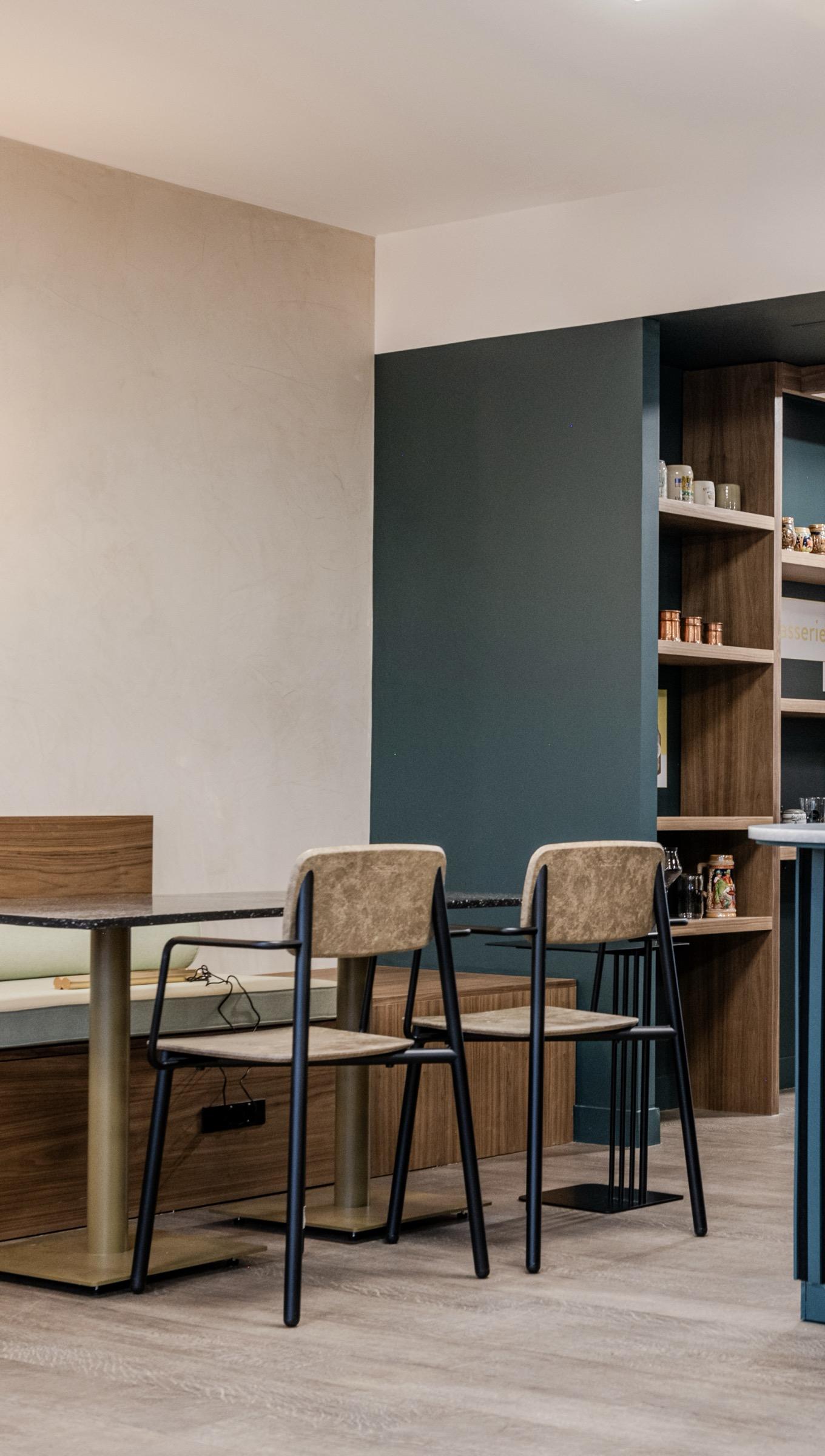
Chair
Ella Chair
The Ella chair is the result of years of work to design a sustainable chair made 100% in France.
From 309 € excl. VAT
View details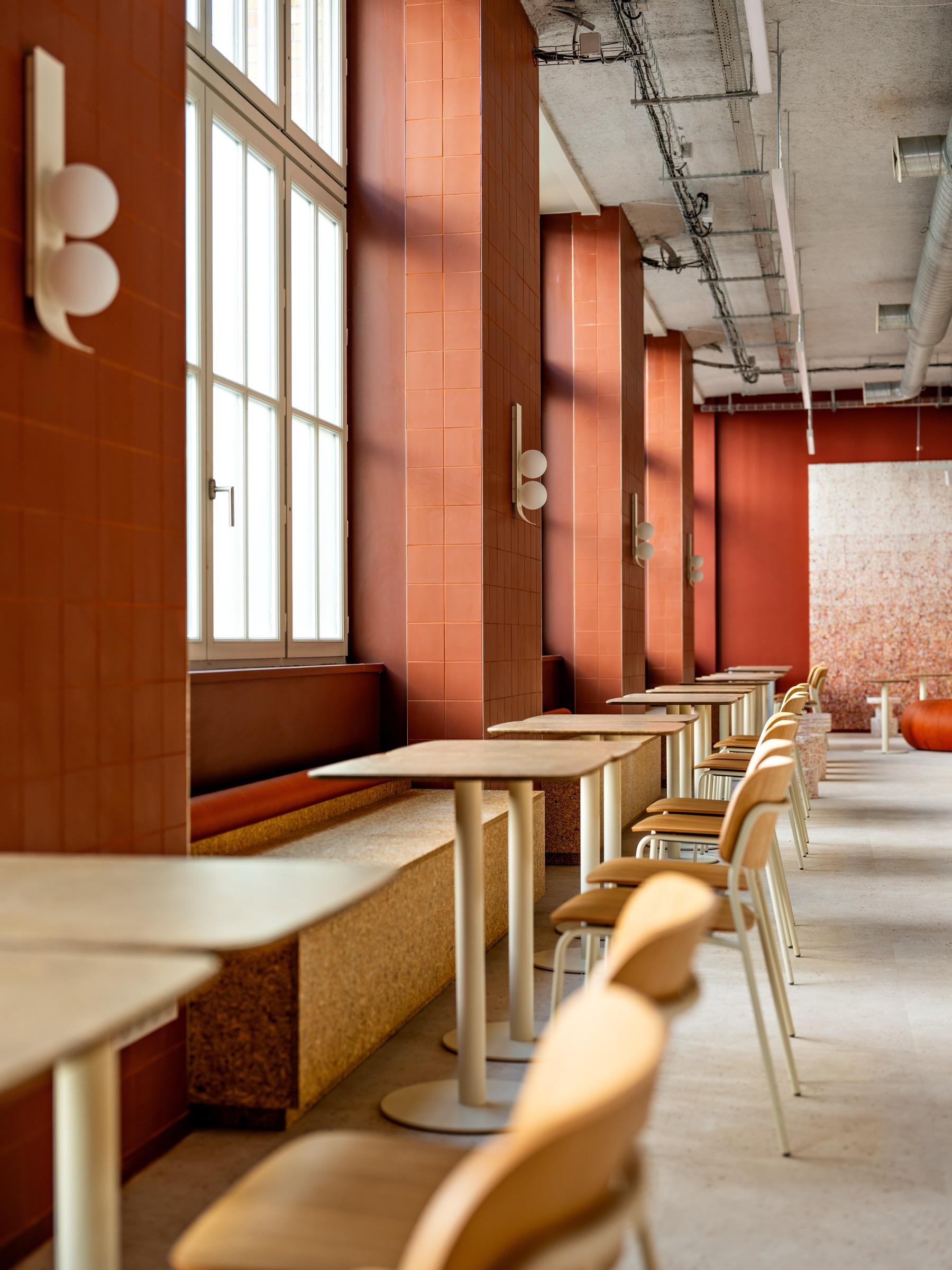
Modular table
Cicero Table
The Cicero table reinvents the bistro table in a low-carbon version.
From 341 € excl. VAT
View detailsClient references
Restaurant references
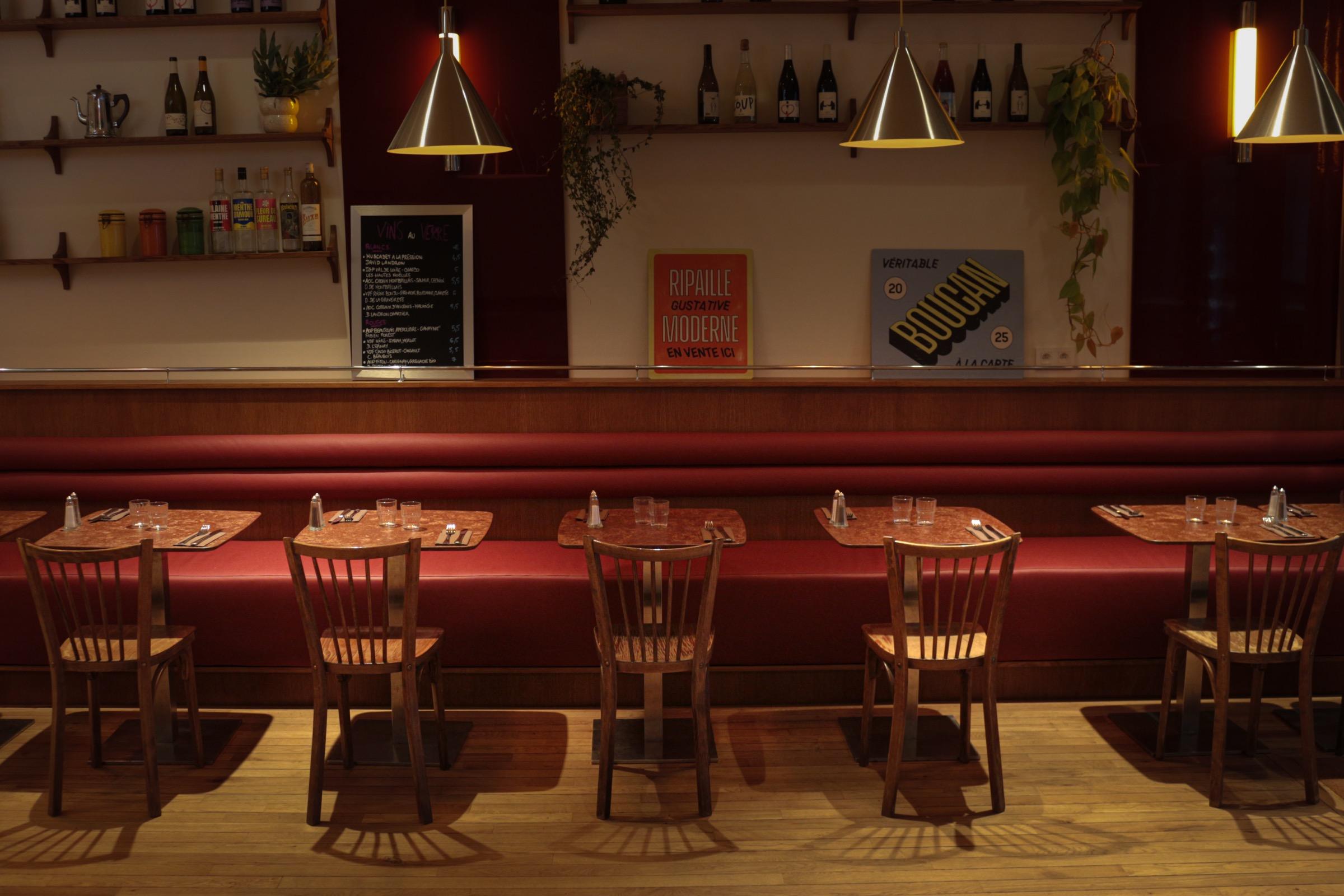
Boucan
Bar & BrewpubNantes, France
Boucan bar in Nantes fitted out with Newport bar stools and Cicero tables in recycled Balt®.
View the projectLes Indécises
RestaurantParis, France
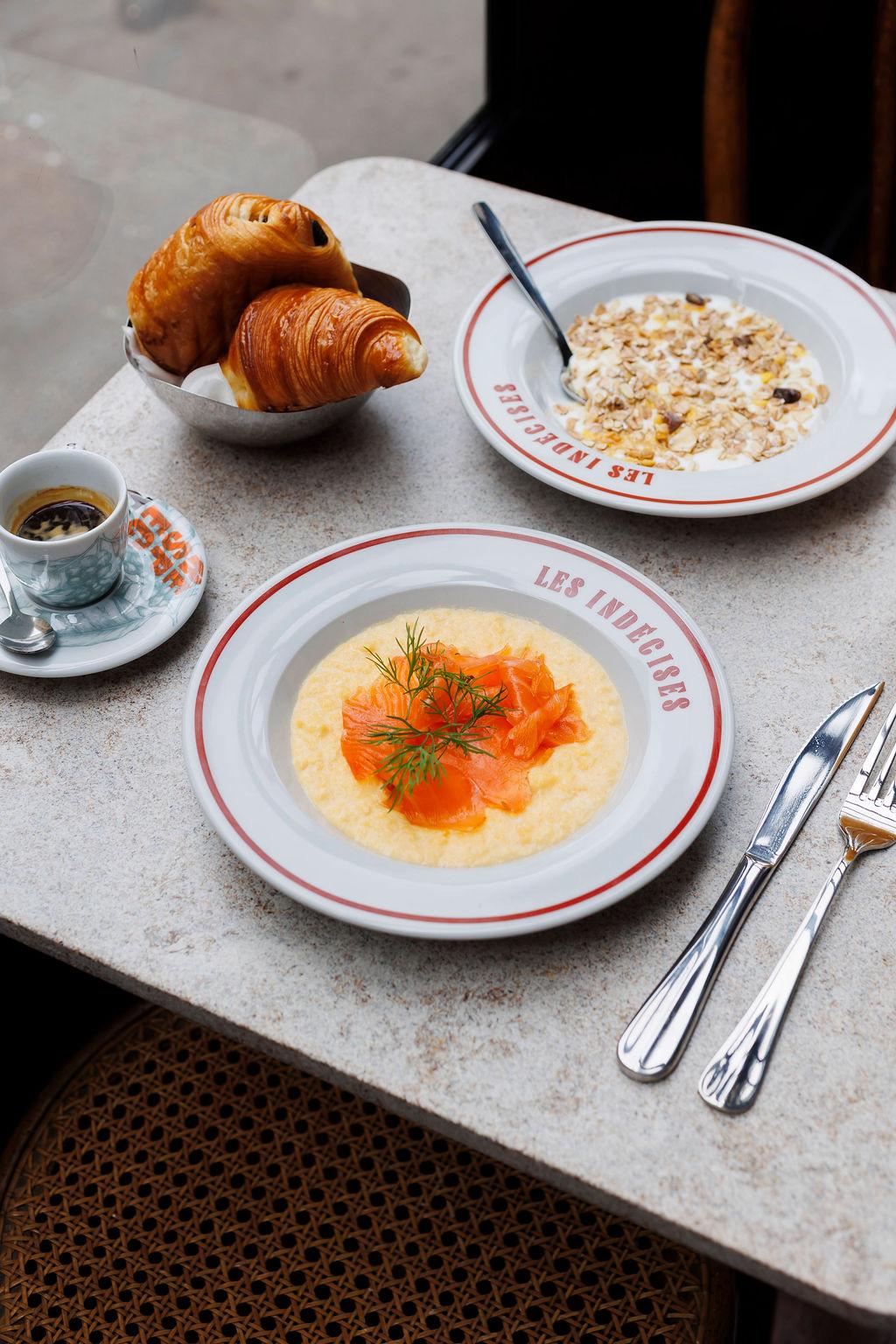
Les Indécises restaurant in Paris fitted out with Cicero tables in recycled Balt®.
View the project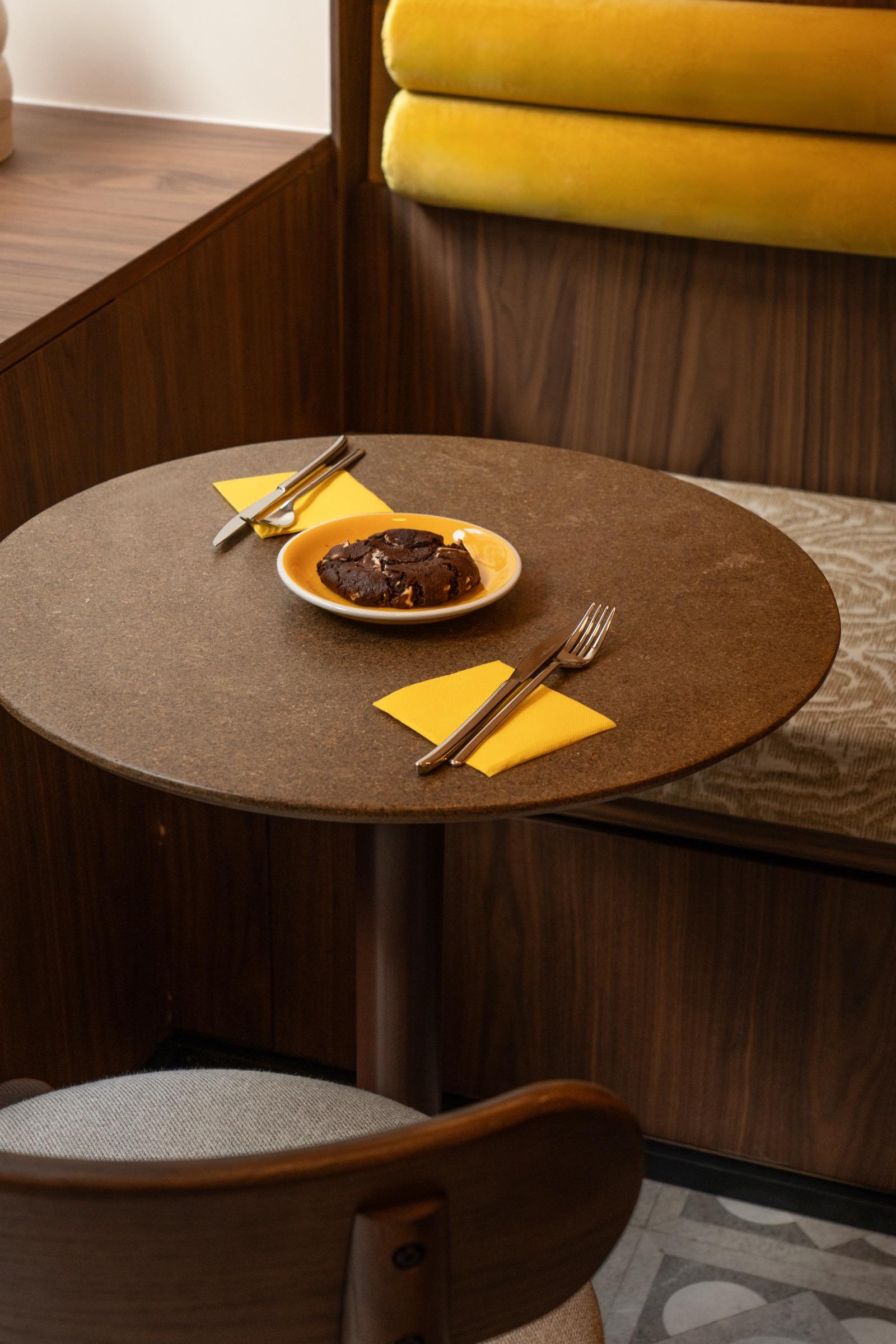
Clode
RestaurantParis, France
Clode coffee shop in Paris fitted out with Cicero tables in recycled Balt®.
View the projectFAQ
Frequently asked questions
Which furniture should you choose for a professional restaurant?
For a restaurant, furniture must combine sturdiness (resistance to stains and knocks), practicality (easy upkeep, ideally modular) and looks (consistency with the visual identity). The Instead range offers Cicero tables (bistro, high, low), Ella chairs and Newport stools designed for this use.
Does Instead restaurant furniture resist stains and splashes?
Yes. Balt® absorbs only 4.5% water and resists food stains and splashes. A damp cloth is enough day to day. For stubborn stains, any neutral household cleaner will do.
Can restaurant furniture be customised to your visual identity?
Yes. The steel frame is available in more than 100 RAL colours. Balt® comes in 8 standard finishes (brown, blond, white, amber, stout, marbled). For colours specific to your brand guidelines, a bespoke quote is possible.
How much does professional Instead restaurant furniture cost?
Prices start from €217 excl. VAT for the Newport stool, €309 excl. VAT for the Ella chair and €341 excl. VAT for the Cicero table. Volume discounts are available for larger orders. Contact us for a tailored quote.
2026 catalogue
The whole range, in one document.
Product sheets, dimensions, finishes and trade prices.